Why is it called the Valley of the Temples?
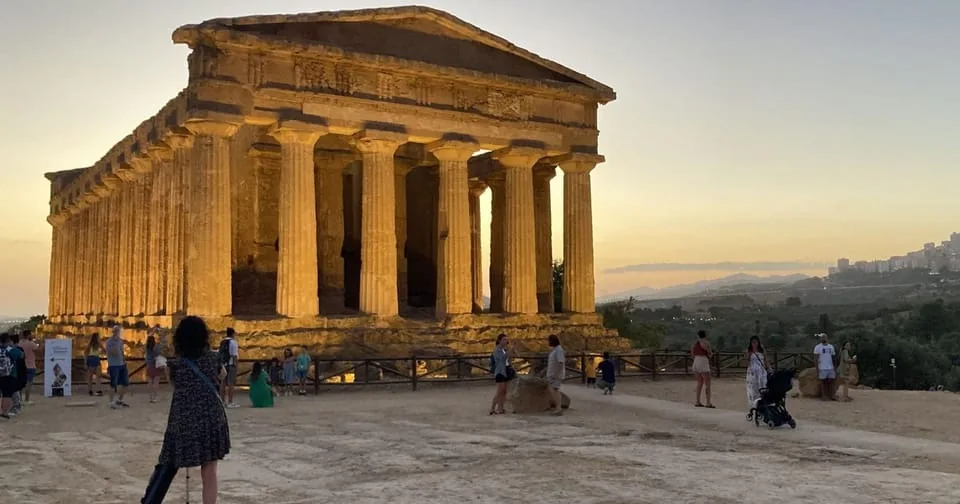
A valley with no valley
The site is the sacred area of Akragas, the Greek city founded around 580 BC that grew into one of the wealthiest in the Mediterranean. Its temples were built along the southern edge of the city on a long ridge — positioned to be seen from land and sea. The romantic name “Valley of the Temples” emerged much later and, though geographically loose, perfectly captures the sweep of temples set in open countryside.
Which temples line it?
Seven Doric temples survive in whole or in part, including the near-complete Temple of Concordia, the Temple of Juno on the high eastern point, the Temple of Heracles, the colossal Temple of Olympian Zeus and the photogenic Temple of the Dioscuri. Our visitor guide walks them in order.
Hear the full story on site
A guided tour brings the history of Akragas to life as you walk — priority entry plus a local guide, in about two hours.
Frequently asked questions
Why is it called the Valley of the Temples?
The name describes the temple-lined sacred area of ancient Akragas. It is actually a misnomer — the temples stand on a ridge rather than in a valley — but the name has stuck for centuries.
Is the Valley of the Temples really a valley?
No. The great Doric temples line a low ridge overlooking the sea, not a valley floor. The name is historical and poetic rather than geographic.
What was the city called?
Akragas — a Greek colony founded around 580 BC that became one of the richest cities in the ancient Mediterranean. The Romans later called it Agrigentum.